
How To Host A Private Party At A Restaurant
How To Host A Private Party At A Restaurant
Hosting a private dinner party at a restaurant is the process of reserving a dedicated or semi-private space at a dining venue, coordinating a custom menu and beverage program, and managing every detail from invitations to payment so your guests enjoy a seamless, professionally executed evening.
This guide covers choosing the right venue type, planning your menu and drinks, managing costs and logistics, personalizing the guest experience, and selecting an outdoor setting that elevates the occasion.
Venue selection sets the foundation for your entire event. Private dining rooms offer full enclosure and controlled service, semi-private spaces provide flexibility at lower cost, full buyouts suit large-scale celebrations, and outdoor garden settings deliver natural ambiance that indoor rooms cannot replicate. Booking four to six weeks ahead for small groups, or two to three months for larger parties during peak seasons, secures the date and space you need.
Menu planning involves choosing between shared plates for a relaxed, communal feel and plated multi-course dinners for precise pacing and presentation. Collecting dietary restriction and allergy information from guests early, then sharing it directly with the kitchen, protects everyone at the table and prevents last-minute complications.
Costs extend well beyond food and drink. Minimum spend requirements, service charges of 18 to 22 percent, room fees, and tax can add 30 to 40 percent on top of your base total. Requesting an itemized estimate during the booking process eliminates billing surprises.
Guest experience details bring the evening together. Thoughtful seating arrangements shape conversation flow, personalized décor reflects the occasion's character, and a well-chosen beverage format (whether curated wine pairings, a signature cocktail, or an open bar) complements every course.
For hosts in Coconut Grove, an open-air garden setting beneath a mature oak canopy offers a ready-made atmosphere where lush greenery and natural light do most of the decorating work.
Why Should You Host a Private Dinner Party at a Restaurant?
You should host a private dinner party at a restaurant because it eliminates the stress of cooking, cleaning, and coordinating logistics while delivering a polished experience for your guests. A restaurant handles the food preparation, service staff, table settings, and ambiance, freeing you to focus entirely on your guests and the occasion itself.
Hosting privately at a restaurant also gives you access to professional-grade kitchens, experienced servers, and curated drink programs that would be difficult to replicate at home. Whether the celebration calls for an intimate gathering of eight or a seated dinner for fifty, restaurants offer flexible spaces and dedicated event coordinators who manage every detail from arrival to dessert.
The shift toward dining out as a primary social experience continues to accelerate. According to the U.S. Department of Agriculture's Economic Research Service, 56.3 percent of total food expenditures in 2025 were spent on food away from home, confirming that Americans increasingly prefer restaurant settings for meaningful meals and gatherings.
Beyond convenience, a restaurant private dinner party creates a sense of occasion that home entertaining rarely matches. Guests arrive in a fully prepared space, enjoy dishes crafted by a professional kitchen team, and leave without anyone in the host's circle needing to wash a single plate. For hosts who want to celebrate a milestone birthday, an anniversary, a corporate achievement, or simply bring friends together, delegating the operational burden to a restaurant transforms the event from a logistical challenge into a genuinely enjoyable evening. The sections ahead cover how to choose the right restaurant type, plan your menu, manage costs, and personalize every detail of your private dinner.
What Type of Restaurant Is Best for a Private Dinner Party?
The best type of restaurant for a private dinner party depends on your guest count, budget, and desired atmosphere. Options range from dedicated private dining rooms to semi-private areas, full buyouts, and outdoor garden settings.
What Makes a Restaurant With a Private Dining Room Ideal?
A restaurant with a private dining room is ideal because it provides a fully enclosed, dedicated space where your group can dine without interruptions from the general dining room. This separation allows for personalized service, controlled noise levels, and the flexibility to customize décor or audiovisual setups.
Private dining rooms also give the kitchen team a focused setting for handling special requests. This matters especially when guests have food allergies. According to a 2024 study published by the National Institutes of Health, one in three people with food allergies report having a reaction in a restaurant, and approximately 33 million Americans suffer from food allergies. A dedicated room with assigned staff who follow an allergy management plan significantly reduces that risk.
What Are the Advantages of a Semi-Private Space?
The advantages of a semi-private space include lower cost, greater flexibility, and a livelier atmosphere compared to a fully enclosed room. Semi-private areas typically use partitions, curtains, or elevated platforms to create separation from the main dining floor without total enclosure.
Key benefits of choosing a semi-private layout include:
- Lower or no minimum spend requirements, making it accessible for smaller budgets.
- The ambient energy of a busy restaurant, which keeps the mood social and relaxed.
- Flexible seating configurations that accommodate varying guest counts.
- Easier availability, since these spaces are often bookable on shorter notice.
For hosts who want a sense of occasion without the formality of a closed room, a semi-private arrangement strikes the right balance.
When Should You Consider a Full Restaurant Buyout?
You should consider a full restaurant buyout when your guest list exceeds the capacity of a private dining room, or when you want complete control over the venue's atmosphere, menu, and timeline. Buyouts suit milestone celebrations, corporate gatherings, and events requiring a cohesive, uninterrupted experience.
Timing affects both availability and cost. According to the U.S. Department of Agriculture Economic Research Service, average daily inflation-adjusted sales at full-service restaurants peaked in May 2025 at $1,427 million and dropped to their lowest in January at $1,193 million. Booking a buyout during slower months like January gives hosts stronger negotiating leverage on pricing and flexibility.
Why Is an Outdoor Garden Setting Perfect for a Private Dinner?
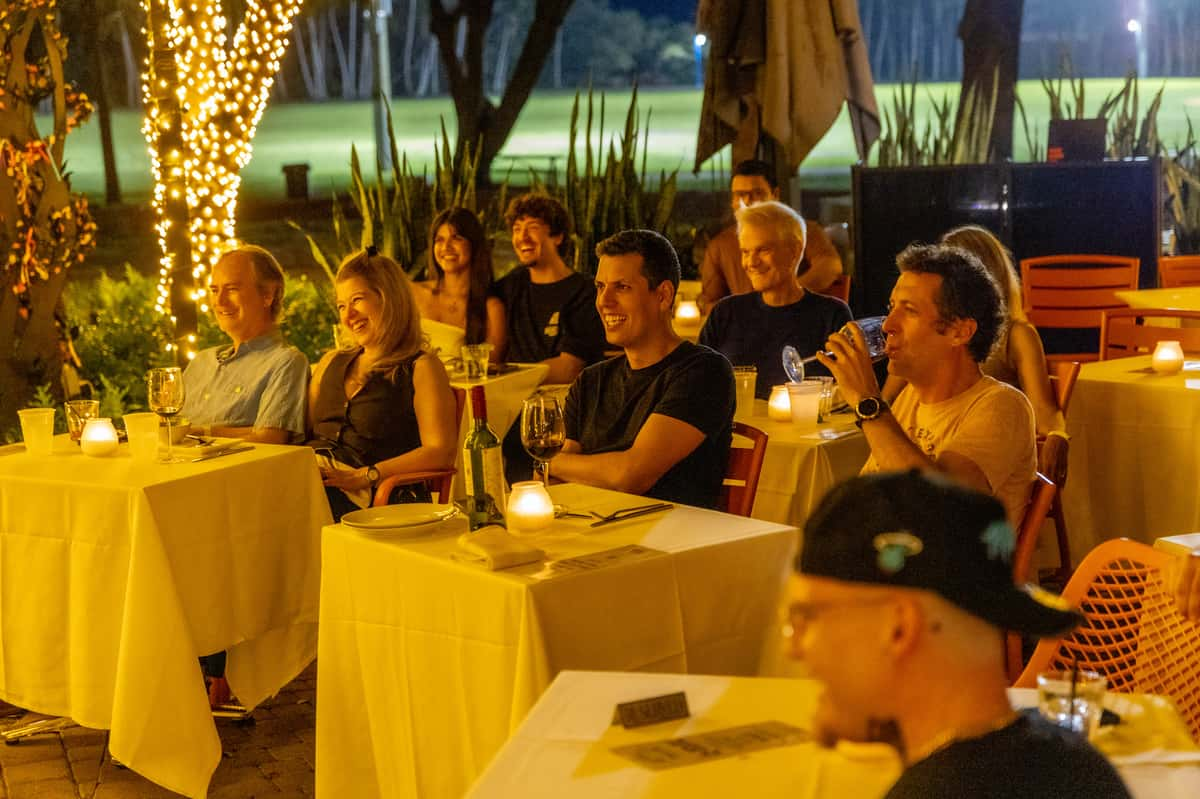
An outdoor garden setting is perfect for a private dinner because it combines natural beauty, open air, and a relaxed atmosphere that enclosed spaces cannot replicate. Lush landscaping, ambient lighting, and canopy shade create an effortlessly elegant backdrop requiring minimal additional décor.
Outdoor settings also offer practical advantages:
- Natural ventilation keeps large groups comfortable without relying on climate control.
- Flexible layouts accommodate long communal tables or smaller clustered seating.
- The scenery provides a built-in conversation starter and photo-worthy backdrop.
For hosts in warm climates like South Florida, garden dining turns a private dinner into a sensory experience that feels celebratory from the moment guests arrive. Glass & Vine in Coconut Grove exemplifies this approach, offering an open-air setting beneath Peacock Park's historic oak canopy where the natural scenery provides an effortless backdrop for private gatherings. Understanding the right venue type sets the foundation for your next planning step: securing your reservation timeline.
How Far in Advance Should You Book a Restaurant for a Private Party?
You should book a restaurant for a private party at least four to six weeks in advance for small gatherings, and two to three months ahead for larger events or peak seasons. Booking timelines depend on party size, season, and venue popularity.
For events during high-demand periods, even earlier reservations are essential. According to the U.S. Department of Agriculture Economic Research Service, average daily inflation-adjusted sales at full-service restaurants peaked in May 2025 at $1,427 million and dropped to their lowest in January at $1,193 million. This seasonal swing means spring and summer bookings fill faster, while winter dates may offer more flexibility.
Key factors that influence how far ahead you should book include:
- Guest count: Parties of 20 or more typically require dedicated spaces that are limited in availability.
- Day of the week: Friday and Saturday evenings book weeks earlier than midweek options.
- Holiday proximity: Events near Valentine's Day, Mother's Day, or the December holiday season should be reserved two to three months out.
- Venue type: A full restaurant buyout demands significantly more lead time than reserving a semi-private area.
- Menu customization: Custom prix fixe or family-style menus need additional planning time between the host and the kitchen.
Reaching out early also gives you leverage to negotiate details like minimum spend thresholds, seating arrangements, and beverage packages. Restaurants with dedicated event coordinators can streamline this process considerably when given adequate notice.
For anyone planning a private dinner in a popular dining destination like Coconut Grove, starting the conversation early is one of the simplest ways to secure the date, space, and menu you want. Restaurants like Glass & Vine, which combine historic location with garden ambiance, tend to book especially quickly during peak seasons due to their unique outdoor settings. Once your booking timeline is set, the next step is building a menu that fits both the occasion and your guests' preferences.
How Do You Choose the Right Menu for a Private Dinner Party?
You choose the right menu for a private dinner party by selecting a service style that fits your group size, coordinating courses with the chef, and accounting for every guest's dietary needs. The sections below cover shared plates, plated multi-course dinners, and allergy accommodations.
How Should You Plan a Shared Plates or Family-Style Menu?
You should plan a shared plates or family-style menu by selecting a variety of dishes that encourage communal dining and conversation. This format works best for groups that want a relaxed, social atmosphere rather than a formal, coursed experience.
A strong family-style spread balances multiple elements:
- Choose three to five shareable dishes that span proteins, vegetables, and starches.
- Include at least one bold anchor dish, such as a whole roasted fish or a large-format cut of meat.
- Add lighter options like seasonal salads and grain bowls so every guest finds something appealing.
- Confirm portion sizes with the restaurant's events team; shared plates typically require 30 to 40 percent more food than individual plating.
Coordinating the menu with the kitchen in advance prevents last-minute substitutions. For hosts who value an easygoing feel where guests serve themselves, shared plates consistently set the right tone.
How Do You Handle a Plated Multi-Course Dinner?
You handle a plated multi-course dinner by working with the restaurant's chef to design a progression of courses that builds in flavor and complexity. A plated format gives the host precise control over pacing and presentation, making it ideal for milestone celebrations or business dinners.
Key steps for planning a successful multi-course dinner include:
- Limit the menu to three or four courses; an appetizer, a salad or intermezzo, a main course, and dessert provides structure without overwhelming guests.
- Offer two to three entrée options so guests can choose based on preference.
- Set a prix fixe price per person to simplify budgeting and streamline kitchen execution.
- Discuss plating timeline with the events coordinator so courses arrive at a comfortable pace, typically 20 to 30 minutes apart.
A plated dinner demands more coordination than family-style service, yet the polished result justifies the extra planning.
How Do You Accommodate Dietary Restrictions and Allergies?
You accommodate dietary restrictions and allergies by collecting guest information early, sharing it with the restaurant's kitchen team, and confirming that safe preparation protocols are in place. Skipping this step carries real consequences; according to a study published by the National Institutes of Health, approximately 33 million people in the U.S. suffer from food allergies, and one in three of those individuals report having experienced a reaction in a restaurant setting.
Effective allergy management for a private dinner involves several actions:
- Send a brief dietary survey to every guest at least two weeks before the event, asking about allergies, intolerances, and lifestyle diets such as vegan, gluten-free, or kosher.
- Share the compiled list directly with the restaurant's chef or event coordinator so alternative dishes can be prepared on separate equipment.
- Request that allergen information be noted on printed menus or place cards at each seat.
- Confirm that kitchen staff have been trained on cross-contamination prevention, since many restaurants still lack formal allergy protocols.
Taking allergies seriously protects guests and shows thoughtful hosting. With dietary needs addressed, the next step is understanding the costs involved in hosting your private dinner.
How Much Does It Cost to Host a Private Dinner at a Restaurant?
The cost to host a private dinner at a restaurant depends on minimum spend requirements, menu format, and additional service fees. Below, each factor is broken down to help you budget accurately.
What Is the Typical Minimum Spend Requirement?
The typical minimum spend requirement is a guaranteed dollar amount the restaurant requires your party to meet in total food and beverage purchases. Most private dining rooms set this threshold based on the day of the week, time of year, and guest count. Weekend evenings and peak seasons carry higher minimums than weekday lunches. If your group's orders fall short, you pay the difference as a room fee. Always confirm whether tax and gratuity count toward the minimum, since policies vary between venues. Asking for the minimum spend upfront prevents surprises and helps you plan a per-guest budget before finalizing your headcount.
How Does a Prix Fixe Menu Affect the Total Cost?
A prix fixe menu affects the total cost by locking in a set per-person price for a predetermined sequence of courses. This structure simplifies budgeting because you multiply the fixed rate by your guest count to calculate the food portion of the bill. Prix fixe menus often cost less per person than à la carte ordering, since the kitchen plans ingredients in bulk and reduces waste. However, premium add-ons like upgraded proteins, supplemental courses, or wine pairings increase the per-head rate. For hosts who want cost certainty without sacrificing quality, a prix fixe arrangement is often the most practical choice.
What Additional Fees Should You Expect Beyond Food and Drink?
The additional fees you should expect beyond food and drink include service charges, tax, room rental fees, and setup costs. These line items can add 30 to 40 percent on top of your food and beverage total.
Common additional fees include:
- Service charge or auto-gratuity, typically 18 to 22 percent of the pre-tax subtotal.
- Sales tax, applied to both food and service charges depending on local regulations.
- Room or venue rental fee, sometimes waived if the minimum spend is met.
- AV or equipment rental for presentations, microphones, or special lighting.
- Floral, décor, or custom setup fees arranged through the restaurant or outside vendors.
According to the U.S. Bureau of Labor Statistics, average hourly earnings in food services and drinking places reached $22.02 in May 2026, which reflects the rising labor costs restaurants factor into private event pricing. Requesting an itemized estimate early in the planning process ensures no hidden charges appear on the final bill.
Understanding total costs upfront makes it easier to handle payment and gratuity on event night.
What Should You Ask at a Restaurant Before Booking a Private Event?
You should ask a restaurant about space availability, menu flexibility, allergy protocols, pricing structure, and cancellation policies before booking a private event. The following questions cover the essential details every host needs to confirm.
Start by clarifying the logistics of the private dining space itself. Ask whether the room is fully enclosed or semi-private, what the maximum and minimum guest counts are, and whether you will have a dedicated server for the evening. These details directly affect the intimacy and flow of your event.
Menu-related questions deserve particular attention. Request to see sample prix fixe or family-style options, and ask how far in advance the menu must be finalized. Confirm whether the kitchen can accommodate dietary restrictions, including vegan, gluten-free, and kosher preparations. According to the Centers for Disease Control and Prevention, more than half of restaurant staff interviewed had never been trained on food allergies, and many lacked key allergen knowledge. This makes it essential to ask specifically whether the kitchen has a food allergy protocol and whether staff receive formal training on allergen handling.
Financial terms should be addressed early. Key questions include:
- What is the minimum spend requirement, and does it include tax and gratuity?
- Are there separate fees for room rental, AV equipment, or setup?
- What is the deposit amount, and what is the cancellation or refund policy?
- Can you bring outside items such as a cake, flowers, or printed materials?
Finally, ask about the timeline for the evening. Confirm when you can access the space for setup, whether there is a hard end time, and how the restaurant handles events that run long. Hosts who address these questions upfront avoid the most common day-of surprises and negotiate from a position of clarity.
Choosing the right drink selection is just as critical as finalizing the food.
How Do You Plan the Drink Selection for a Private Dinner Party?
You plan the drink selection for a private dinner party by choosing a beverage format that fits your budget, guest preferences, and menu style. The key decisions involve choosing between an open bar and a curated package, building wine pairings with the restaurant's sommelier, and deciding whether a signature cocktail adds value.
Should You Offer an Open Bar or a Curated Drink Package?
You should offer an open bar when budget flexibility is high and guest preferences vary widely; a curated drink package works better when you want cost control and a cohesive dining experience. Each format shapes the evening differently.
Key differences include:
- An open bar lets guests order freely, which suits casual celebrations but makes final costs harder to predict.
- A curated drink package pre-selects wines, cocktails, and non-alcoholic options at a fixed per-person rate, simplifying billing.
- Consumption-based tabs offer a middle ground, charging only for what guests actually order.
For most private dinners with a set menu, a curated package keeps the beverage program aligned with the courses. Open bars tend to work better for cocktail-style receptions where guests mingle rather than sit for a plated meal.
How Do You Build a Wine Pairing Menu With the Restaurant?
You build a wine pairing menu by collaborating directly with the restaurant's sommelier or beverage director to match each course with a complementary wine selection. Start by sharing your finalized menu, guest count, and any dietary restrictions well before the event.
According to a study published by the National Institutes of Health, only a small proportion of full-service restaurant menus target customers with dietary restrictions, meaning hosts should proactively confirm that low-sulfite, organic, or allergen-conscious wine options are available. Request a tasting if the restaurant offers one, so you can approve pairings before the dinner. Providing the sommelier with your budget per bottle or per guest ensures recommendations stay within range while still elevating the meal.
When Does a Signature Cocktail Menu Make Sense?
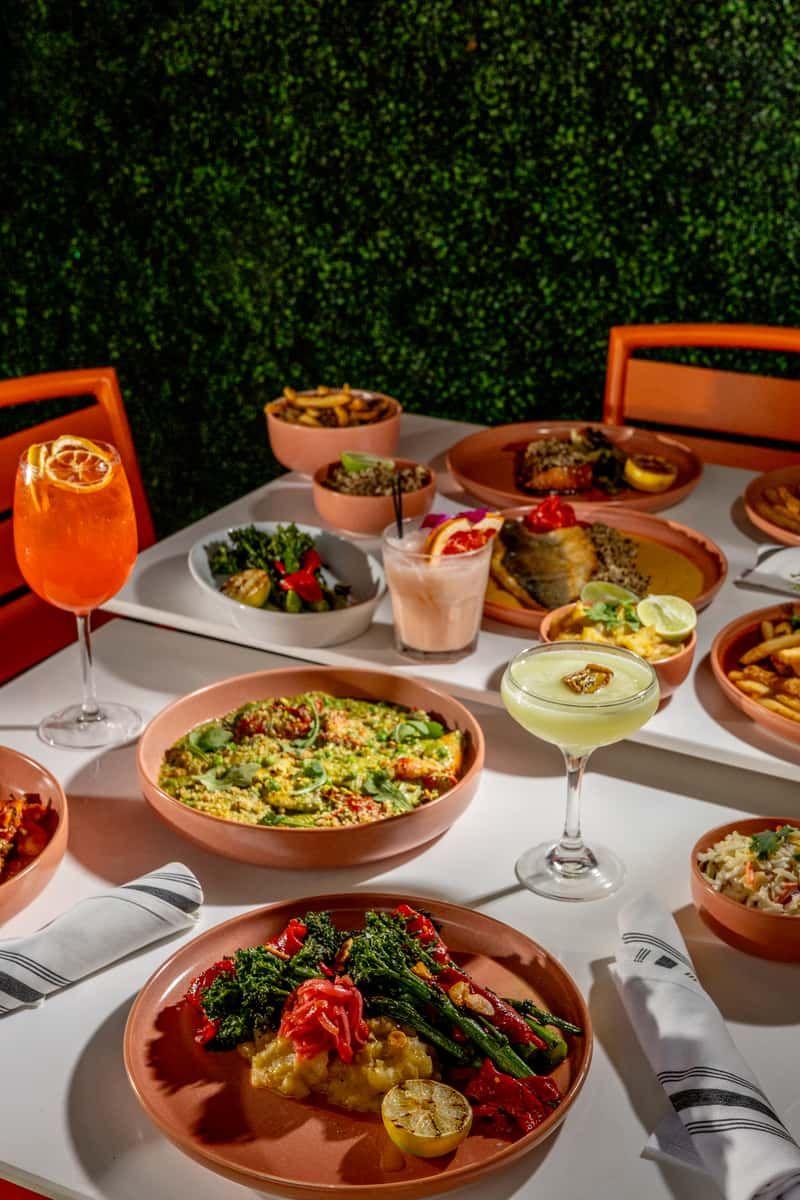
A signature cocktail menu makes sense when you want to personalize the event, celebrate a specific theme, or create a memorable first impression as guests arrive. Custom cocktails work particularly well for milestone occasions, such as birthdays, engagements, or corporate celebrations where branding matters.
Practical reasons to add one include:
- It gives guests a curated welcome drink that sets the tone before dinner begins.
- It reduces decision fatigue during the cocktail hour by offering a house-selected option.
- It allows the host to incorporate seasonal ingredients or meaningful flavor profiles tied to the occasion.
If the dinner is intimate and course-focused, wine pairings alone may suffice. Signature cocktails add the most value when there is a dedicated reception period before guests sit down.
With the beverage plan finalized, attention turns to guest count and invitation logistics.
How Many Guests Should You Invite to a Private Dinner Party?
You should invite between 8 and 50 guests to a private dinner party at a restaurant, depending on the venue's private dining capacity and the experience you want to create. Smaller groups of 8 to 12 guests encourage intimate conversation, while mid-size gatherings of 20 to 30 suit celebrations that balance connection with energy. Larger parties of 40 to 50 typically require a full private dining room or buyout arrangement.
The ideal guest count ultimately depends on three factors: the room's maximum seating, your per-person budget relative to any minimum spend requirement, and whether you prioritize close interaction or a livelier atmosphere. Confirming a final headcount with the restaurant at least two weeks before the event ensures the kitchen and service team can prepare accordingly, from plating logistics to table configuration. Once your guest count is set, sending invitations early helps lock in accurate numbers.
What Is the Best Way to Send Invitations for a Restaurant Dinner Party?
The best way to send invitations for a restaurant dinner party is to match the invitation format to the formality of the event and send them early enough for guests to plan. The approach varies depending on whether the dinner is casual, formal, or somewhere in between.
A well-crafted invitation sets the tone before guests arrive and collects essential details like dietary needs and headcount. For casual gatherings among friends, a group text or digital invitation through platforms like Paperless Post or Evite works well; these tools allow easy RSVP tracking and automatic reminders. More formal occasions, such as milestone celebrations or corporate dinners, call for printed invitations or elegantly designed digital cards sent four to six weeks in advance.
Every restaurant dinner party invitation should include specific details:
- The date, time, and expected duration of the dinner
- The restaurant name, full address, and parking or transit information
- The dress code, if applicable
- Whether the meal is hosted or if guests will contribute
- An RSVP deadline with clear instructions for responding
- A note requesting dietary restrictions or allergy information
Collecting dietary needs upfront is particularly valuable when coordinating a set menu with the restaurant. Knowing your final headcount and any food sensitivities well before the event allows the kitchen to prepare accordingly, reducing last-minute complications.
For the best results, send a "save the date" message as soon as the reservation is confirmed, then follow up with the formal invitation containing all logistics. A brief reminder one week before the dinner helps lock in attendance and gives you time to communicate the final guest count to the restaurant's event coordinator.
Choosing the right invitation method ultimately reflects the spirit of the evening you are creating. With guest details confirmed, personalizing the décor and ambiance becomes the natural next step.
How Do You Personalize the Décor and Ambiance at a Restaurant?
You personalize the décor and ambiance at a restaurant by coordinating with the events team on lighting, table settings, florals, and personal touches that reflect your occasion. Most venues allow customization within their existing aesthetic.
The key is working within the restaurant's character rather than against it. Start by discussing your vision with the private dining coordinator early in the planning process, so the team can advise on what is feasible and what enhances the space best.
Common ways to personalize a private dinner setting include:
- Adjusting lighting with candles, string lights, or dimmers to set the desired mood.
- Adding floral arrangements or greenery that complement the venue's style and your color palette.
- Providing custom place cards, printed menus, or name tags for a curated feel.
- Incorporating themed centerpieces, photos, or signage for birthdays, anniversaries, or milestones.
- Selecting specific table linens, charger plates, or glassware if the restaurant offers them.
- Playing a curated playlist or hiring a musician, depending on the venue's sound policy.
For hosts looking for a space where nature already sets the tone, an outdoor garden venue reduces the need for heavy decorating. Lush landscaping, mature tree canopies, and natural light create a ready-made atmosphere that only needs minimal personal touches to feel uniquely yours. This often makes the planning process simpler and more cost-effective.
Understanding seating layout is equally important, since how guests are arranged shapes the energy of the entire evening.
What Role Does Seating Arrangement Play in a Private Dinner?
Seating arrangement plays a central role in a private dinner by shaping how guests interact, how conversation flows, and how comfortable everyone feels throughout the evening. The right configuration turns a meal into a genuinely connected experience.
A thoughtful seating plan pairs guests who share common interests or complementary personalities, preventing awkward silences and encouraging natural dialogue. For smaller gatherings, a single long table creates an intimate, family-style atmosphere where every guest remains part of one conversation. Larger parties benefit from round tables, which eliminate head-of-table hierarchies and allow each person to engage with multiple neighbors.
Hosts should seat the guest of honor near the center of the table rather than at the end, ensuring visibility and easy interaction with the most people. Alternating personalities, such as placing a lively conversationalist beside a quieter guest, keeps energy balanced across the group.
For anyone hosting at a restaurant, confirming the table layout with the events team in advance ensures the arrangement supports the dinner's purpose, whether that is a celebratory toast, a business discussion, or a relaxed social gathering. Once seating is settled, coordinating payment and gratuity details completes the logistical picture.
How Do You Handle Payment and Gratuity for a Private Dinner?
You handle payment and gratuity for a private dinner by clarifying billing structure, gratuity expectations, and accepted payment methods with the restaurant before the event. The key areas to settle include deposit requirements, final billing format, and tip calculations.
How Should You Structure Payment With the Restaurant?
You should structure payment with the restaurant by agreeing on a deposit schedule and final settlement method during the booking process. Most private dining arrangements require a deposit to secure the date, with the remaining balance due on the event day or shortly after.
Ask whether the final bill will reflect actual consumption or the pre-agreed minimum spend, whichever is higher. Confirm accepted payment methods, since some venues restrict split payments for private events. Getting these details in writing prevents billing surprises and keeps the evening focused on your guests rather than logistics.
What Is the Standard Gratuity for a Private Dining Event?
The standard gratuity for a private dining event typically ranges from 18 to 22 percent of the pre-tax total. Many restaurants include a mandatory service charge for private parties, which may or may not go directly to the service staff.
Clarify with the event coordinator whether the service charge replaces a traditional tip or functions as a separate venue fee. If a service charge is included, asking how it is distributed helps you decide whether an additional cash tip for servers is appropriate. For events with exceptional, personalized service, a gratuity above 20 percent acknowledges the extra preparation that private dining demands.
Should the Host Pay the Entire Bill or Split Costs With Guests?
The host should typically pay the entire bill when organizing a private dinner party. Hosting implies financial responsibility, and covering the full cost creates a seamless, generous experience for everyone at the table.
If budget constraints make this impractical, co-hosting with a partner or collecting contributions beforehand are discreet alternatives. Avoid passing individual checks at the table during a private event; it undermines the curated atmosphere you worked to create. Settling all financial details before guests arrive, whether through a pre-paid package or a single card on file, keeps the evening elegant and uninterrupted.
Understanding your payment and gratuity approach early simplifies the next step: avoiding common hosting mistakes.
What Common Mistakes Should You Avoid When Hosting at a Restaurant?
The common mistakes you should avoid when hosting at a restaurant include neglecting dietary restrictions, skipping a final headcount confirmation, underestimating the total budget, failing to communicate event details to the venue, and leaving seating arrangements to chance. Each of these oversights can derail an otherwise well-planned private dinner party.
One of the most consequential errors is ignoring guests' food allergies and dietary needs. According to the National Institutes of Health, approximately 33 million people in the U.S. suffer from food allergies, and one in three of those individuals report having a reaction in a restaurant setting. Collecting dietary information during the invitation phase and sharing it directly with the kitchen prevents dangerous situations and ensures every guest feels included.
Failing to confirm the final guest count at least 48 to 72 hours before the event creates problems with seating, portioning, and minimum spend calculations. Restaurants build staffing and food preparation around confirmed numbers, so last-minute changes strain the kitchen and can result in unexpected charges.
Budget surprises rank among the most common frustrations for first-time hosts. Many people account for food and drinks but overlook service charges, room fees, tax, and gratuity. Requesting an itemized cost breakdown during the planning stage eliminates shock when the bill arrives.
Poor communication with the venue is another frequent misstep. Hosts sometimes assume the restaurant understands the event's tone, timeline, and special requests without explicitly stating them. A detailed run-of-show document, even a simple one, aligns expectations between host and event coordinator.
Finally, leaving the seating arrangement entirely unplanned often leads to awkward groupings where guests who share no common ground sit together for hours. Thoughtful seat assignments encourage conversation and keep the energy balanced throughout the evening. Even a loose plan produces a noticeably better guest experience than leaving it to chance.
With these pitfalls addressed, the right venue setting can transform a private dinner into something truly memorable.
How Can an Open-Air Garden Restaurant in Coconut Grove Elevate Your Private Dinner?
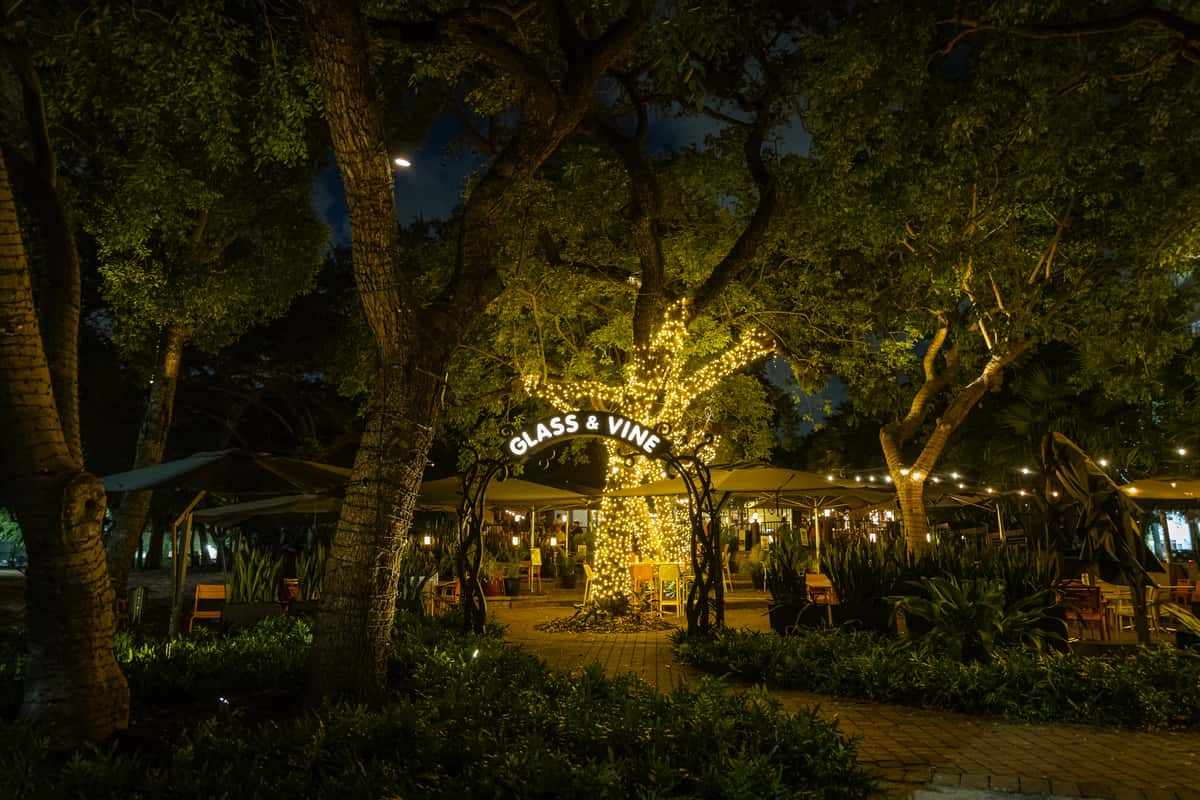
An open-air garden restaurant in Coconut Grove can elevate your private dinner by combining natural scenery, fresh air, and a relaxed atmosphere that indoor venues cannot replicate. Glass & Vine's setting beneath Peacock Park's oak canopy offers exactly this experience.
Does Glass & Vine's Outdoor Setting Offer the Right Atmosphere for a Private Dinner Party?
Glass & Vine's outdoor setting offers an atmosphere purpose-built for private dinner parties. Nestled beneath the shade of Peacock Park's centuries-old oak canopy in Coconut Grove, the restaurant creates a garden-inspired environment where lush greenery, open air, and soft natural light set a tone that feels both intimate and celebratory.
The location itself carries historical significance; Peacock Park was once the site of Miami's first hotel, the Bay View House, built in 1883. That sense of place adds a layer of character no generic banquet hall can match. Glass & Vine provides brunch, lunch, and dinner menus featuring locally sourced ingredients designed for sharing, which naturally suits the communal rhythm of a private gathering. A dedicated happy hour selection, curated cocktails, and wine options allow hosts to build a complete beverage program alongside the meal. Families benefit from the playground-adjacent layout, and dog-friendly patio access means no guest gets left behind.
What Are the Key Takeaways for Hosting a Private Dinner Party at a Restaurant?
The key takeaways for hosting a private dinner party at a restaurant center on early planning, clear communication, and choosing a venue that matches your group's needs. The most successful private dinners share a few common elements:
- Book well in advance, especially during peak months when full-service restaurant demand is highest.
- Select a space type, whether private room, semi-private area, or outdoor garden, based on guest count and desired ambiance.
- Collaborate with the restaurant on a menu that accommodates dietary restrictions and allergies.
- Confirm all costs upfront, including minimum spend requirements, service fees, and gratuity policies.
- Personalize details like seating arrangements, décor, and drink selections to reflect the occasion.
According to the U.S. Department of Agriculture Economic Research Service, food sales at full-service restaurants reached an inflation-adjusted $488.4 billion in 2025, reflecting how central restaurant dining has become to how people gather and celebrate. Choosing a venue like Glass & Vine, where the setting does much of the work for you, lets hosts focus on the people rather than the logistics.